🚨
VOTE "YES" ON ARTICLE 2
🗳️
SEPTEMBER 8, 2026 RYE ELEMENTARY SCHOOL 8AM TO 7PM
🚨 VOTE "YES" ON ARTICLE 2 🗳️ SEPTEMBER 8, 2026 RYE ELEMENTARY SCHOOL 8AM TO 7PM
Help Save Rye’s Beautiful & Ecologically Valuable Swallows
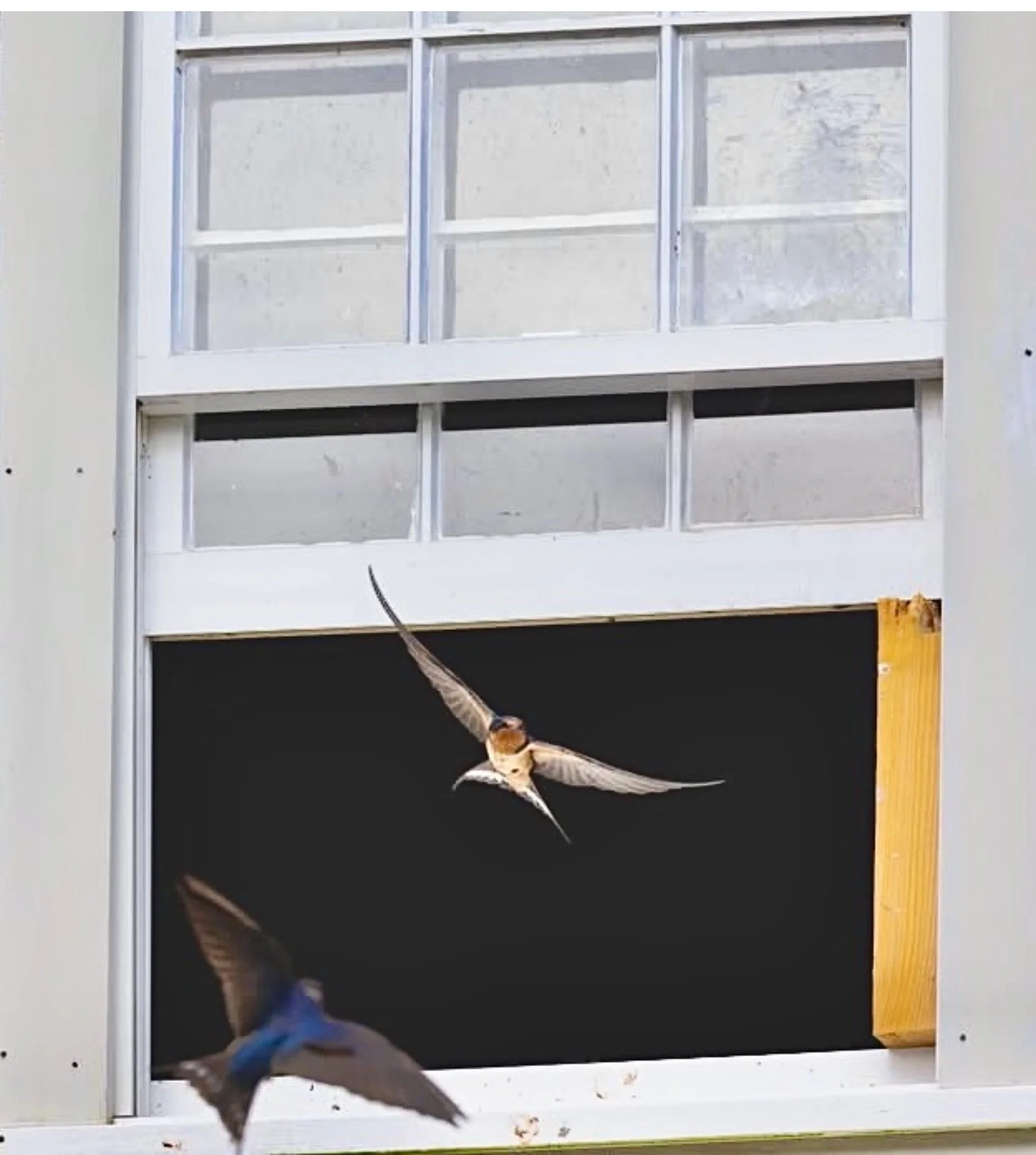
The Goss Farm barn swallows have lost their historic nesting site.
Goss Barn, 251 Harbor Rd Rye, NH
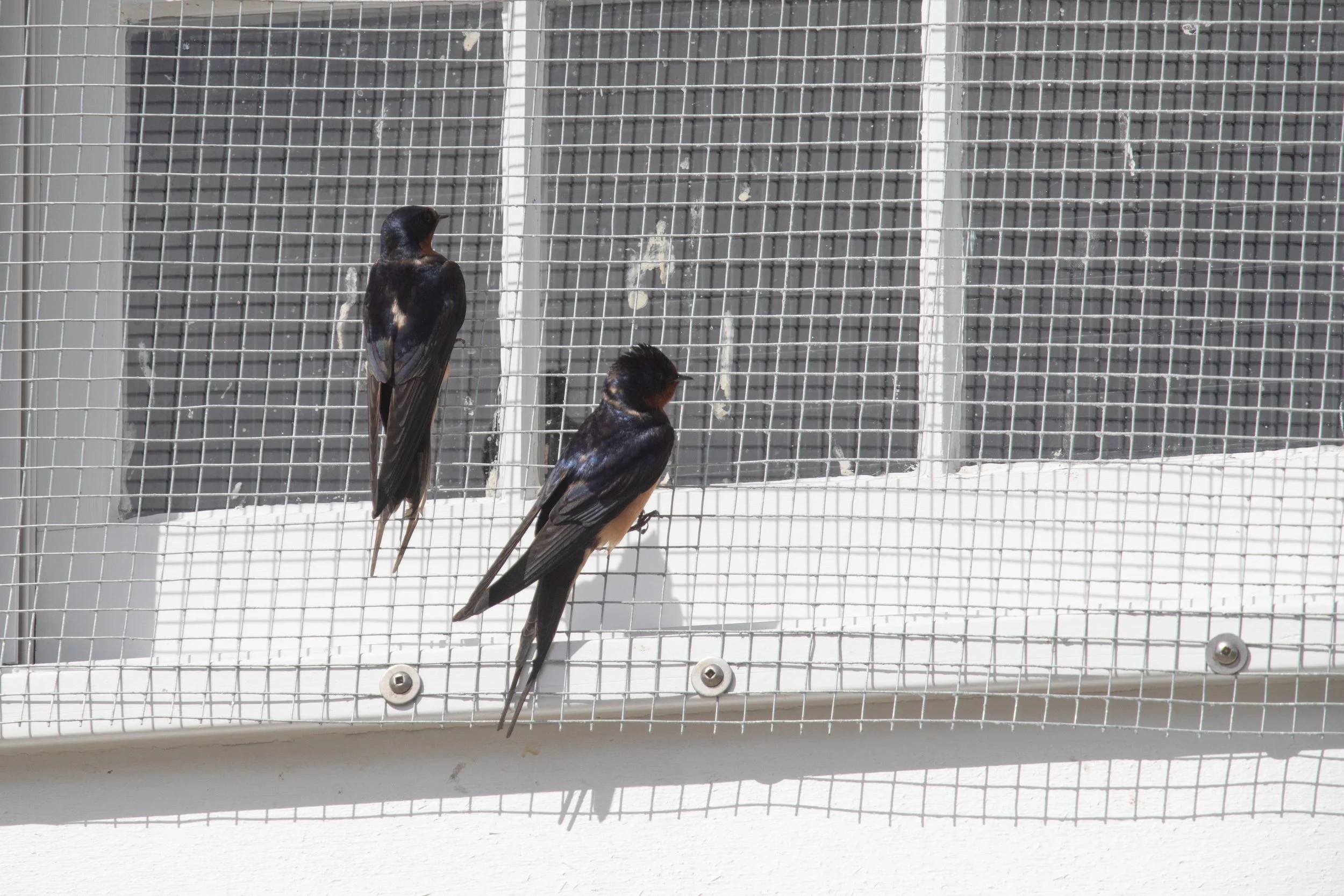
In April 2026, approximately 30 nesting barn swallow pairs returned to the Goss Farm after migrating from South America. Swallow scientists have noted that this colony is unique for both its size and its decades-long loyalty to the Goss Barn. The Rye Conservation Commission (RCC) chose to block the birds from entering the barn this year. This has disrupted the usual nesting behavior of the colony. Ultimately, this disruption is likely to result in the extinction of the colony.
The RCC purchased the barn and property in 2010 with Open Space funds and federal funds that require that the barn be used for agricultural purposes. Despite this, the RCC now plans to exclude the swallows from the barn – even though federal data shows an approximately 80% decline in New Hampshire’s barn swallow population over the past 50 years.
RCC claim: Swallows are a nuisance and make a mess
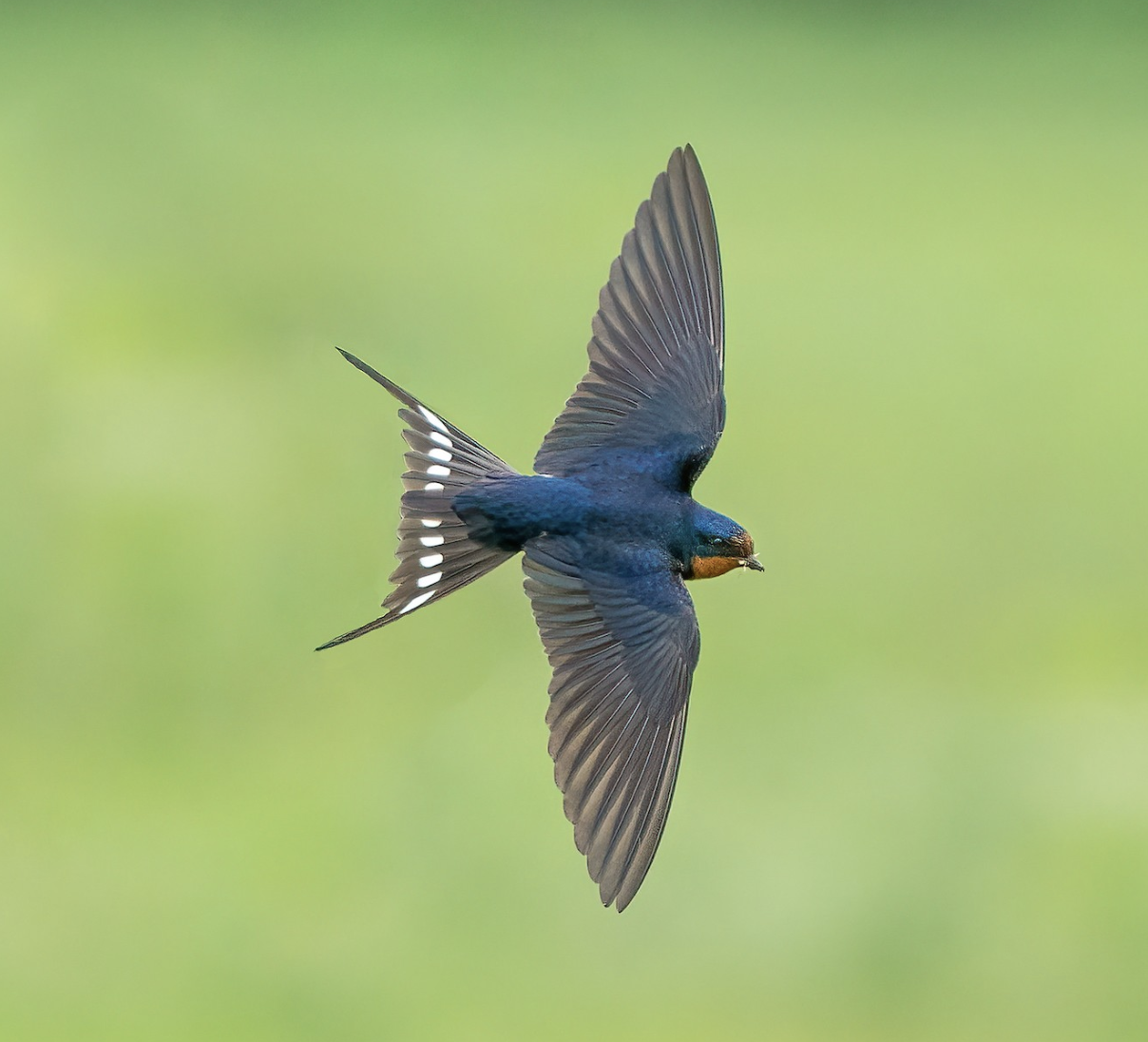
Facts: Barn Swallows are aerial insectivores that eat flying insects, including those carrying West Nile Virus, EEE and Jamestown Canyon Virus. Since 2010, volunteers have successfully managed swallow droppings by placing newspaper and tarps under the nests.
RCC claim: Artificial nesting structures can take the place of the barn
Facts: These structures are costly and do not replace the loss of large barns as essential swallow habitat. Designs available online give the impression they are effective but offer no supporting data. A 2019 Bird Studies Canada study found that among 114 nesting structures built, only 7% of 1,750 artificial nest were occupied. Allowing the swallows back in the barn will cost Rye taxpayers nothing.
Threatening a steeply declining, valued species is in direct contravention of the Rye Master Plan (RYE 2035) in general and, in particular, the Rye Conservation Commission’s mission to protect our town’s natural resources.
Frequently Asked Questions
-
Concerned citizens successfully petitioned for a special town meeting which was held on July 29, 2026.
Article 2 proposes a town ordinance for the "Protection of all Migratory Bird Colonies on Town-owned Lands in Rye'.
VOTE 'YES' on ARTICLE 2.
-
9-acre Goss Farm and its barn is a conservation property owned by the Town of Rye and
placed under the management and control of the Rye Conservation Commission. The citizens of
Rye supported the purchase of Goss Farm through an appropriation, which provided a necessary
match to obtain USDA Farm and Ranchland grant funding. -
The Goss Farm Barn Swallow colony is a congregation of 25-30 active pairs of nesting Barn
Swallows that has utilized the Goss Farm barn since at least the mid-1900’s. Barn Swallows are
highly faithful to nesting sites, returning to the same building, colony, and even the same nest
and mate for their entire life (Shields 1984). Joe Goss of the Goss family the owned the barn
before it was sold to the town stated that “the swallows were always there,” —he remembers
observing the Barn Swallow colony in the 1960’s. This season, the RCC closed the Goss Farm
Barn to the swallows for the first time in over 70 years.ion -
Yes. A colony of 25-30 pairs is considered unusually large. Barn Swallows have declined by
80% in New Hampshire over the past 50 years (USGS Breeding Bird Survey 2020). This decline
is due to loss of habitat (loss of barns, open land) and to other, largely unknown factors. Many
barn owners report their Barn Swallow colonies declining in recent years. Yet the Goss Barn the
colony thrives, with numbers remaining stable. This makes the barn and the surrounding habitat
all the more unique today. -
Yes. Barn Swallows are known as a “friend of the farm,” and each Barn Swallow consumes
hundreds of flying insects a day, including mosquitoes that carry diseases such as EEE, West
Nile Virus, and Jamestown Canyon Virus. They are environmental indicators, and their presence
is associated with healthy, functioning ecosystems. Additionally, Barn Swallows’ long
association with humans has endeared them to many people and cultures. Their beauty, graceful
acrobatic flight, and faithfulness to nesting sites provide joy and inspiration locally and beyond.
They are depicted in ancient art from around the world, including Egypt, Greece, China, and
Europe, as well as in Native American art. -
Recent studies show that Barn Swallows evolved alongside humans, using our barns and
outbuildings as we spread across the landscape some 11,000 years ago (Smith et al. 2018). Barn
Swallows’ natural nesting habitat is within barns (hence their name), and they cannot be found
nesting at natural sites in North America. Additionally, a landmark study (Rosenburg et al.),
published in the journal Science, reported that in North America we have lost nearly 3 billion
breeding birds, or approximately one-third of the total population—since 1970. This staggering
decline affects common, widespread backyard birds, not just rare or endangered species. We
need to be protecting and conserving native birds wherever they occur to further prevent
declines. -
No. Although a few pairs might use the alternative structures, the structures cannot support
the colony of 25-30 pairs that has historically nested in the Goss Barn. Barn Swallows are not
highly colonial, and large colonies do not nest in small structures. The swallows that nested in
the Goss barn were spaced throughout the barn. Additionally, barns provide more stable thermal
temperatures, protection from predators, and perching areas for newly fledged young. A 2019
Bird Studies Canada study found that among 114 nesting structures built, only 7% of 1,750
artificial nest cups installed among the 114 structures were occupied (Bird Studies Canada 2019). -
Without access to the interior of the Goss Barn, the colony will not be able to produce
offspring, and no new breeding pairs will be attracted to the site. Thus, the colony will dwindle
over the next couple of years until the colony is absent from the site. Even if a few pairs of
swallows use the nesting structures, their future is uncertain, as these structures have not been
proven to maintain even small colonies over time. -
Yes. Goss Farm is a hot spot for Barn Swallows. Adult Barn Swallows are faithful to nesting
sites, while swallows breeding for their first year (first-year breeders) tend to disperse. Every
year established breeders return, producing many chicks that disperse and breed elsewhere the
following season, and the barn also attracts young birds born elsewhere that are breeding for
their first year. Many Barn Swallow colonies are declining in New Hampshire but the one at
Goss Barn is not, thus it likely plays an outsize role in the maintenance of local populations. -
No. Without exception, attempts to relocate Barn Swallows into alternative nesting structures
have failed. In Hadley, MA, wildlife biologists at a United States Fish and Wildlife Service
(“USFWS”) attempted to relocated Barn Swallows from a failing horse stable into a nearby
barn—not small alternative structures like those constructed by the RCC. Additionally, this
colony was only monitored for 3 years after the project, so no one knows if the project saved the
colony in the long-term. -
No. The RCC claims there are 9 pairs of nesting Barn Swallows using the alternate structures.
That is a 60% reduction in the number of active nests at Goss Farm. The RCC has not conducted
a formal scientific survey of the number of pairs using the structures and has proceeded in a
way—unlike the USFWS—that did not include provisions for future monitoring and honest
evaluation of results. The presence of Barn Swallows on the structures initially is of no value for
measuring those structures’ effectiveness. Any Barn Swallows that are nesting in the structures
are there because the barn is there, not because the structures are. The 25-30 pairs of Barn
Swallows returned this past spring to nest in the barn found it closed and persisted in trying to
get inside to nest for weeks. Some pairs may have finally resorted to using the structures, but
healthy, established, large colonies do not nest in small structures, and small structures cannot
support the historic Goss Barn colony. -
The RCC closed the Goss Farm Barn to people in 2025, purportedly out of concern that the
years of accumulated waste in the barn (evidence of the huge volume of insects consumed by the
barn swallows) could be a public health risk. After the swallow breeding season ended in fall, the
RCC had the barn professionally cleaned to remove the accumulated waste. It was not until just
before the 2026 breeding season that the RCC decided to close the barn to the swallow colony,
despite no evidence or health professional’s opinion that the eviction was necessary to protect
human health after the cleaning. -
No. There is no evidence that the RCC needed to spend $13K for the 2025 cleaning, as the
RCC did not put the job out for competitive bid. The RCC has claimed that the barn is an
“expensive birdhouse”, when in fact the Town actually has a wasteful RCC.
There is no reason to repeat the RCC’s exorbitant expenditure now that years of accumulated
waste has been removed from the barn, mitigation measures can be implemented to keep areas of
the barn free from droppings where necessary, and volunteers can perform annual cleaning as
they had for the past 15 years (with the exception of previously inaccessible areas that can now
be reached). Barn Swallows and people have coexisted on farms for millennia, and the cleaning
of the droppings after the few months the birds are here nesting is minimal for the benefits they
provide. -
Yes. None of the agricultural or educational uses intended for the barn are made impossible
by the presence of the swallow colony. There is no health hazard due to the presence of an active
swallow colony—particularly now that the barn has been cleaned and any future bird waste can
be easily managed on a seasonal basis. -
No. Pursuant to NH RSA 36-A:2, a Town’s citizens may vote to establish a conservation
commission for the “proper utilization and protection of the natural resources and for the
protection of watershed resources of said city or town.” Pursuant to NH RSA 36-A:4, I, A
conservation commission may also “acquire in the name of the city or town, subject to the
approval of the local governing body, by purchase, the fee in such land or water rights within the
boundaries of the municipality, or any lesser interest, development right, easement, covenant, or
other contractual right including conveyances with conditions, limitations, or reversions, as may
be necessary to acquire, maintain, improve, protect, or limit the future use of or otherwise
conserve and properly utilize open spaces and other land and water areas within their city or
town, and shall manage and control the same, but the city or town or commission shall not have
the right to condemn property for these purposes.